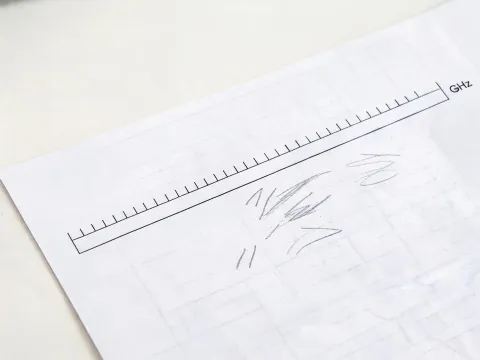
Cropped specification sheet with a frequency axis and no brand mark

Quick spec brief

signal generator ghz

A signal generator ghz figure is an open choice until the buyer writes what the number means. LinkScope Sourcing 55 uses this sheet to hold the unfinished lines before an alternate is accepted. It is a handoff, not a sustainability statement and not a stock list.

Record the ceiling you think you need, the unit, and whether that ceiling is fundamental output. A printed 6 GHz range and a printed 20 GHz range answer different fixtures. If the procedure never leaves 1 GHz, say so, and do not let a higher ceiling become a mandatory line by habit. If the procedure touches 18 GHz at the connector, the lower offer is an alternate that needs its own column.

Lines still open on the gigahertz choice

Open lineWrite this before comparisonCheck on the alternate
Upper frequency Number plus GHz, and fundamental versus harmonic or multiplier Level in dBm still available at that frequency
Lower frequency The lowest tone the procedure uses, in kHz or MHz Whether the alternate actually starts that low
Harmonics Offset or harmonic order, unit dBc, frequency where it applies A different multiplier can worsen the same headline GHz
Modulation CW, analog modulation, or vector I/Q with bandwidth in MHz License and memory, not just the RF range
Interface 50 ohm or other impedance, connector, channel count Adapter loss is not the generator specification
Evidence Datasheet revision, calibration date, parameters covered A newer range claim on an older certificate is a mismatch

Frequency range, measurement accuracy, and calibration traceability are the three documents a reviewer can point at. Gain, in this family, is not an antenna gain figure. If someone pastes an antenna gain number into the brief, mark it as the wrong product family and send it back.

Before an alternate is accepted

Range words

Ask the supplier to quote the continuous range, not a single spot frequency that happens to work. Flatness across the band is a separate sentence from the maximum frequency. If flatness is unknown, leave it unknown rather than copying a mid-band number to the edge.

Harmonic mode

Some sources reach a higher GHz figure by using a harmonic. The level, the filtering, and the connector on that path can differ from the fundamental port. The alternate should say which port the number belongs to.

Control path

A USB brick and a benchtop chassis can share a GHz label and differ in SCPI, reference clock, and settling. Put the control path next to the frequency so the price is not compared across unlike hosts.

Condition

A new unit and a refurbished unit with the same GHz print still differ in option keys and calibration age. Accepting the refurbished alternate means those two lines were read, not that the headline frequency matched.

Sourcing scenario

Background: a buyer has a procedure that says signal generator, 4 GHz, and a second note from the fixture team that says the mixer check uses 12 GHz. Destination is Ohio, quantity 1, timing is tied to a line shutdown window, supplier preference undecided. Process: the sheet splits 4 GHz CW from 12 GHz, asks whether 12 GHz is fundamental, and asks for connector and harmonic data on each. Result: an alternate that covers 4 GHz and stops there is visible as a partial reply. The 12 GHz line stays open until a model and a datasheet revision are named. See the inquiry names if the family label is still loose.

Vector versus CW remains a content choice, not a branding choice. A wider GHz span does not add I/Q. If the alternate drops modulation, the acceptance note should say the procedure will run CW, or the alternate is refused. Public standard pages, including IEEE 802 for the controlling network, do not close this RF question.
Send the open lines

This footer is a paper band, not a dark quote banner. Leave unknown GHz cells blank in the requirement text so the factory fills them instead of inheriting a guess.

The requirement desk uses the same fields if you prefer the full contact layout.