Bill of materials console

vector signal generator price

A vector signal generator price becomes comparable when the modulation path, the frequency ceiling, the output connector, and the calibration packet sit on one quotation line. LinkScope Sourcing 55 is an independent sourcing partner. The desk records that line from a business buyer and asks proposed factories to answer the same fields. No instrument is held here, and no street price is published.

Write the application first: conducted stimulus, receiver blocking, or a modulated carrier for a radio board. Then name frequency range with unit, output level in dBm, whether the carrier is CW or I/Q modulated, system impedance (a lab source is commonly 50 ohm), and the connector on the front panel. Quantity, US destination, and requested timing belong in the same brief. An optional target budget needs a currency and a per-unit or whole-order basis. High-end, mid-range, budget, or undecided is a buyer preference, not a grade this desk has verified.

Measurement accuracy for level and frequency is a datasheet line with conditions, not a family slogan. Ask which carrier and which temperature the amplitude tolerance uses. Calibration traceability means a certificate tied to the serial number, with a date and the parameters covered. A photograph of a similar chassis does not transfer those numbers. One comparison row that stays checkable is 50 ohm, N connector, CW, +7 dBm at 1 GHz, +3 dBm at 6 GHz, harmonics at -30 dBc at 1 GHz, VSWR 1.6:1 at 3 GHz, and a 10 MHz reference. If the only level on the quote is +13 dBm at 100 MHz, the 6 GHz point is still open. Background for that row is a conducted board test, the process is to keep each frequency on its own cell, and the result is a visible gap instead of an averaged level.
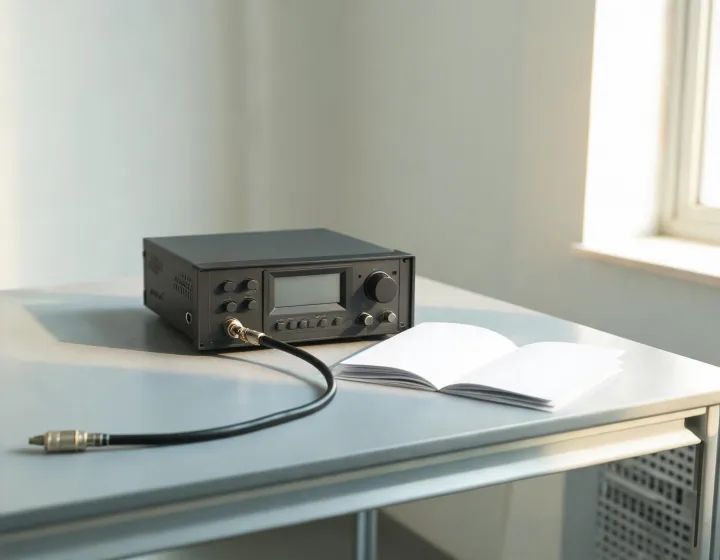
Bench with an unbranded vector signal generator, coaxial lead, and an open specification sheet

Fields that change the quotation

These four cards are the interface questions a supplier should answer before two vector prices are placed side by side. They are checks, not published performance of any model on this site.

Frequency range

State the lower and upper frequencies in kHz, MHz, or GHz, and whether the upper figure is the fundamental output or a harmonic mode. A wider printed range can still drop available level near the edge.

Modulation scope

Separate analog CW from vector I/Q. If the procedure needs a modulated carrier, ask whether the internal baseband, the bandwidth in MHz, and the license key are inside the quoted price.

Connector and impedance

Name 50 ohm or another impedance, plus N, SMA, or 2.92 mm. VSWR at the output, when the test cares about match, should cite the frequency at which it was measured.

Calibration packet

Request the certificate date, the lab identity, and whether level, frequency, and modulation were in scope. A due date twelve months after the last certificate is a question to ask, not a promise from this page.

Where the brief usually starts

Deployment routes below are buyer situations. Each one changes accessories and evidence. None of them is a completed installation by this desk.

Lab

A design bench needs a known connector and a reference clock path. Ask if the 10 MHz input or output is included, and whether the quoted level flatness covers the band the board actually uses.

Line

A production fixture may need remote control more than a large display. Put SCPI, the host operating system, and settling behavior on the quote so a USB module and a rack instrument are not mixed as one price.

Repair

A service depot often inherits an old procedure written around one option set. List the options the procedure calls, then ask the supplier which of those options are present on the serial number being offered.

Radio

When the source feeds a conducted radio test, record channel count and whether an external I/Q baseband is required. IEEE 802 is a host-network question source for the controlling computer. It does not certify the generator output.

Read the procurement brief before you send numbers, then use the contact desk if a field is still open.

Compatibility questions before a price is compared

Does the vector price include the modulation license?

Treat the license as its own line until the supplier marks it included. A chassis that can accept vector modulation is not the same commercial scope as a chassis shipped with the key, the bandwidth, and the waveform memory the procedure uses.

Can an analog microwave source answer a vector brief?

It can answer a CW level-and-frequency brief. If the test needs I/Q or a defined digital modulation, an analog source is a different product family. Keep that split visible so the lower headline figure is not treated as a substitute.

What should the supplier attach to the model name?

Ask for the current datasheet revision, the option list, the connector drawing, and any applicable equipment-authorization evidence for that exact model. A family brochure is context. It is not the evidence file.

How should a target budget be written?

Give an amount or a range, the currency, and whether the figure is per unit or for the whole order. Freight, duties, calibration, and software can sit outside a unit figure. The budget does not require a quotation you already hold.

Send the price basis

The form uses the same fields as the inquiry dialog. On this page the checklist stays beside it so frequency, modulation, quantity, and destination are visible while you type.

  • Model family or the measured name you are pricing.
  • Frequency range, level in dBm, modulation or CW, connector.
  • Quantity, destination, and requested timing.
  • Calibration evidence and licenses you need called out.

Factory quotes remain the supplier statements. This desk compares the written scope. It does not certify measurement accuracy.